

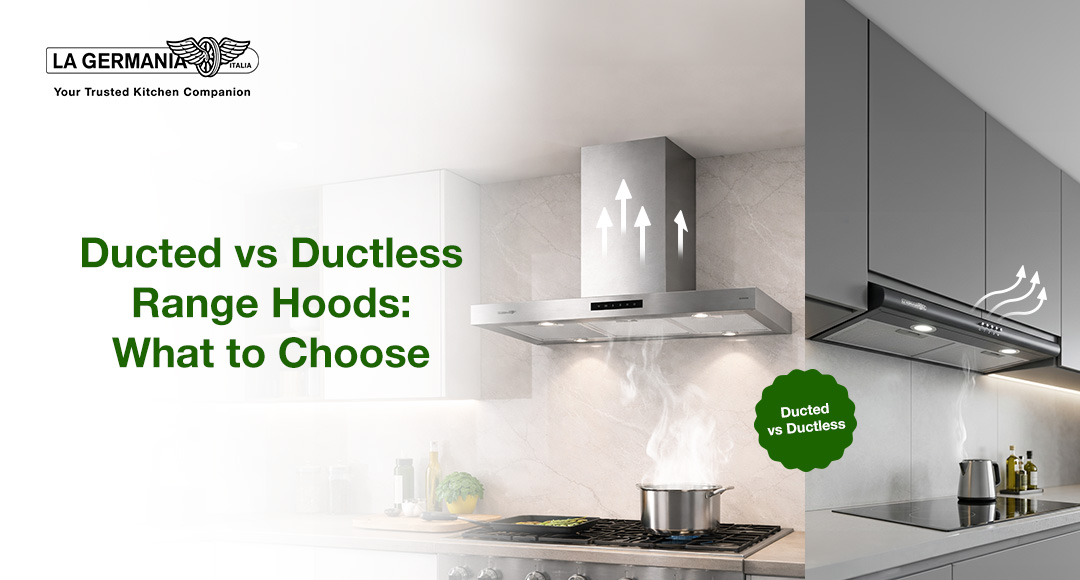
A range hood ductless or ducted system can be a practical and flexible solution for kitchens without external venting options. Choosing between a ductless model and a traditional ducted system is an important step when building or upgrading your kitchen, as ventilation plays a major role in air quality, comfort, and long-term maintenance.
While most homeowners focus on cooktops and ovens, proper ventilation ensures smoke, grease, and odors are effectively managed. If you’re deciding between a ducted system and a range hood ductless option, this guide will help you understand how each works—and which one best suits your space.
Whether you cook occasionally or prepare heavy meals daily, your ventilation system should support your lifestyle.
What Is a Ducted Range Hood Vent?
A ducted range hood vent removes smoke, steam, grease, and odors by pushing air outside your home through installed ductwork. Instead of recirculating air, it completely expels it.
This system connects to external vents through walls or ceilings. It is often preferred in landed homes or kitchens undergoing renovation.
How a Ducted System Works
- The range hood captures airborne grease and smoke.
- Air passes through metal grease filters.
- A powerful motor pushes the air through ducts.
- Air exits the house through an external vent.
Because the air leaves your home entirely, ducted systems offer strong ventilation performance.
Benefits of a Ducted Range Hood Vent
A ducted range hood vent is ideal if performance is your top priority.
Stronger Airflow
Ducted systems typically support higher CFM (cubic feet per minute). This means they can handle heavy cooking such as frying, grilling, or wok-based dishes.
For kitchens using powerful cooktops like gas cooktops, proper ventilation ensures smoke and grease do not linger.
Better Odor Removal
Since air exits your home, strong food smells do not circulate back into the kitchen.
Reduced Humidity
Steam escapes outside, helping control moisture levels—especially helpful in tropical climates.
Lower Long-Term Filter Replacement Costs
Ducted systems use reusable grease filters. You clean them regularly but do not need charcoal filter replacements.
Drawbacks of a Ducted Range Hood Vent
While powerful, ducted systems may not suit every home.
- Requires structural duct installation
- Higher initial installation cost
- Not ideal for condominiums
- May require professional planning
If you are living in a condo or apartment with building restrictions, installing a ducted system may not be possible.
What Is a Ductless Range Hood?
A ductless range hood, also referred to as a range hood ductless system, works differently. Instead of venting air outside, it filters and recirculates air back into your kitchen.
This makes it a popular choice in high-rise condominiums and apartments.
How a Ductless Range Hood Works
- The range hood captures smoke and grease.
- Air passes through a grease filter.
- It then passes through a charcoal filter.
- Filtered air returns to the kitchen.
While it does not remove air entirely, it significantly reduces odors and grease particles.
You can explore built-in ventilation options under range hoods, which include models designed for different kitchen setups.
Benefits of a Ductless Range Hood
A ductless range hood model offers flexibility and convenience.
Easier Installation
No ductwork is required. This makes installation faster and more affordable.
Ideal for Condominiums
Many condo units prohibit structural modifications. A ductless range hood solves that issue.
Flexible Placement
Because it does not rely on ducts, it works well in compact kitchens.
Compatible with Modern Built-In Kitchens
Homeowners pairing their ventilation with appliances like built-in ovens often prefer a seamless ductless design for aesthetic balance.
Drawbacks of a Ductless Range Hood
While convenient, ductless systems have limitations.
- Charcoal filters require replacement
- Airflow is generally weaker than ducted systems
- Does not remove heat or humidity
- Performance depends on filter quality
For heavy daily cooking, a ductless range hood may require more frequent maintenance.
Key Differences Between Ducted and Ductless Range Hood Systems
When comparing options, consider these factors carefully.
Airflow Power
Ducted systems:
- Support higher CFM
- Handle strong smoke output
- Ideal for gas ranges and heavy cooking
Ductless systems:
- Moderate airflow
- Better for light to medium cooking
If your kitchen includes larger ranges like La Germania Freestanding Cookers, stronger ventilation may be necessary.
Installation Requirements
Ducted:
- Requires external venting
- Needs duct planning
- Best during renovation
Ductless:
- No structural modification
- Simple installation
- Ideal for finished units
Maintenance Needs
Ducted:
- Clean grease filters
- Inspect ducts occasionally
Ductless:
- Clean grease filters
- Replace charcoal filters regularly
Long-term maintenance costs should factor into your decision.
Which Range Hood Vent Is Better for Filipino Kitchens?
There is no universal answer. It depends on your cooking style and living situation.
If You Cook Heavy Dishes Regularly
Filipino cooking often involves frying, sautéing garlic and onions, and preparing dishes with strong aromas. In this case, a ducted range hood vent offers better performance.
It removes smoke quickly and keeps your kitchen cooler.
If You Live in a Condominium
A ductless range hood is usually more practical. It provides ventilation without violating building regulations.
If You Value Aesthetic Integration
Many modern kitchens aim for a seamless look. Pairing a ductless hood with appliances such as La Germania Induction Cooktops creates a sleek and contemporary design.
Energy Efficiency and Noise Considerations
Another factor to consider is energy usage and sound level.
Ducted systems:
- Often more powerful
- Can be noisier at high speeds
- More efficient at removing heat
Ductless systems:
- May run longer to achieve the same effect
- Quieter in some compact models
High-quality ventilation models from La Germania are engineered to balance airflow power with controlled noise levels.
Long-Term Value: Thinking Beyond Installation
When choosing between a ducted system and a range hood ductless model, think long-term.
Ask yourself:
- How often do I cook?
- Do I fry or grill frequently?
- Will I renovate in the future?
- How much maintenance am I willing to manage?
- Is resale value important?
If you plan to upgrade your entire kitchen, ventilation should align with your full appliance suite—whether that includes cooktops, ovens, or multifunction units.
Final Verdict: Ducted or Ductless Range Hood?
Choose a ducted range hood vent if:
- You want maximum airflow.
- You cook frequently.
- You can install external ducting.
- You want fewer recurring filter replacements.
Choose a ductless range hood if:
- You live in a condo or apartment.
- Installation flexibility matters.
- You prefer a simpler setup.
- Structural modifications are not possible.
Both options improve kitchen comfort. The key is choosing what fits your home and lifestyle.
Why Quality Matters in Any Ventilation System
Regardless of your choice, build quality makes a difference.
A well-engineered ventilation system lasts longer, performs better, and complements your kitchen design.
Brands like La Germania combine European design principles with reliable performance standards. Whether you choose ducted or ductless, investing in quality ensures better airflow and durability.