

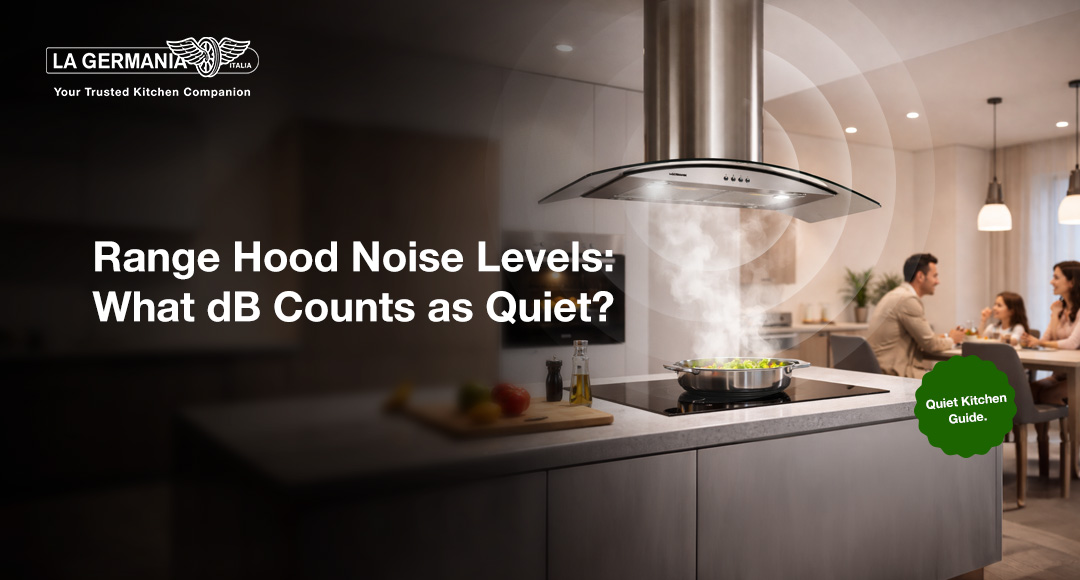
Range hood noise can make or break your kitchen experience. A powerful range hood keeps your kitchen clean and comfortable. But if it sounds like a jet engine, it can quickly ruin the atmosphere.
Modern kitchens are social spaces where families cook, talk, and entertain in the same area. That makes noise level just as important as airflow power.
If you’re shopping for a new range hood exhaust fan, you’ve likely seen noise ratings listed in decibels (dB). But what do those numbers really mean? And what counts as “quiet”?
Let’s break it down in simple terms.
How Is Range Hood Noise Measured?
Noise is measured in decibels (dB). The decibel scale is logarithmic, not linear. This means a small increase in number represents a significant jump in sound intensity.
For example:
- 40 dB sounds twice as loud as 30 dB
- 50 dB sounds much louder than 40 dB
Even a 5–10 dB difference can feel noticeable in a kitchen.
Some manufacturers also use “sones” instead of decibels. One sone equals roughly 40 dB in perceived loudness. However, most homeowners are more familiar with dB.
When choosing a range hood exhaust fan, always check the rated noise level at different speed settings.
What dB Level Is Considered Quiet for a Range Hood?
Here’s a general guide to understand kitchen noise levels:
- 30–40 dB: Very quiet (similar to a quiet library)
- 40–50 dB: Comfortable conversation level
- 50–60 dB: Noticeable but manageable
- 60+ dB: Loud, may overpower conversations
For most households, a range hood that operates at 40–50 dB on low to medium settings is considered quiet.
High-speed settings will naturally produce more noise. The key is balance – strong airflow without constant disruption.
Why Range Hood Noise Matters More Today
Open-concept kitchens are now common in Filipino homes. The kitchen often flows directly into the dining or living area.
If your range hood exhaust fan is too loud, it can:
- Disrupt conversations
- Interrupt television viewing
- Make entertaining guests uncomfortable
- Create stress during long cooking sessions
Noise also becomes more noticeable in smaller condo units where sound echoes easily.
That’s why many homeowners now prioritize quiet performance alongside power.
What Affects Range Hood Noise Levels?
Not all noise comes from the same source. Several factors influence how loud a range hood becomes.
1. Motor Power and Fan Speed
Stronger motors move more air. More air movement usually means more sound.
However, high-quality motors are engineered to reduce vibration and turbulence. A well-built range hood can deliver strong suction without excessive noise.
If you’re pairing your ventilation with high-performance cooktops like La Germania Gas Cooktops, airflow power must match cooking output. But noise control should remain balanced.
2. Ducted vs Ductless Systems
Ducted range hoods:
- Push air outside
- May produce less internal noise
- Often handle higher CFM efficiently
Ductless models:
- Recirculate air
- May sound louder due to filtration resistance
- Depend heavily on filter quality
Explore available models under range hoods to compare designs suited for your kitchen setup.
3. Installation Quality
Even the best range hood brand can sound loud if installed poorly.
Common causes of extra noise include:
- Loose mounting brackets
- Improper duct sizing
- Sharp duct bends
- Thin wall construction
Proper installation reduces vibration and echo.
4. Kitchen Layout and Materials
Hard surfaces reflect sound.
Tiles, stone countertops, and glass backsplashes can amplify noise. Softer finishes like wood cabinetry or textured walls absorb sound better.
If you live in a condo, compact layouts may make a moderate dB rating feel louder.
Does Higher CFM Always Mean Louder?
Not necessarily.
CFM (cubic feet per minute) measures airflow capacity. It does not directly measure sound.
A poorly engineered hood with low CFM can sound louder than a premium high-CFM model.
That’s why brand quality matters.
For example, kitchens equipped with larger appliances such as La Germania Freestanding Cookers require sufficient ventilation. Choosing a quiet yet powerful hood ensures you maintain comfort without sacrificing performance.
How to Choose a Quiet Range Hood Exhaust Fan
When shopping, focus on these practical steps.
Check the dB Rating at Different Speeds
Some models advertise their lowest noise rating only. Always check:
- Low speed dB
- Medium speed dB
- High speed dB
You will likely use low and medium settings most often.
Look for Multi-Speed Controls
Variable speed settings allow flexibility. You can use:
- Low speed for light cooking
- Medium speed for sautéing
- High speed for frying or grilling
This keeps noise under control during everyday use.
Choose a Trusted Brand
Not all ventilation systems are engineered equally.
A well-established manufacturer focuses on motor balance, insulation, and airflow design. Choosing the best range hood brand means investing in quieter operation, stronger durability, and long-term performance.
La Germania, for example, applies European engineering standards that prioritize performance without excessive noise.
How Quiet Should a Range Hood Be for Condo Living?
If you live in a condominium, aim for:
- 40–45 dB at low speed
- Under 55 dB at medium speed
Because condos share walls, vibration control is essential.
Pairing your ventilation system with modern built-in appliances like built-in ovens creates a cohesive kitchen while maintaining comfort.
Signs Your Current Range Hood Is Too Loud
If your existing range hood exhaust fan produces any of these issues, it may be time for an upgrade:
- You raise your voice during cooking
- You avoid turning it on unless necessary
- Vibrations shake cabinets
- You hear rattling or humming
- The noise feels sharp or metallic
Sometimes cleaning grease filters reduces noise. In other cases, aging motors simply wear out.
Noise vs Performance: Finding the Right Balance
Some homeowners assume quieter means weaker. That is not always true.
The goal is balance:
- Enough airflow to remove smoke
- Low enough noise for comfort
- Durable construction
- Easy maintenance
If you are upgrading your entire kitchen, including induction units like La Germania Induction Cooktops, consider how each appliance contributes to the overall cooking environment.
A well-matched ventilation system enhances the experience.
Why Brand Engineering Makes a Difference
When evaluating the best range hood brand, consider more than price.
Premium manufacturers focus on:
- Motor insulation
- Balanced fan blades
- Anti-vibration housing
- Efficient airflow channels
- Durable filter systems
These factors reduce unnecessary noise while maintaining suction strength.
Brands such as La Germania design kitchen appliances to meet both aesthetic and performance standards. Quiet operation is part of long-term usability.
Final Thoughts: What dB Should You Aim For?
If you want a comfortable kitchen environment, aim for:
- Around 40–50 dB during normal cooking
- Under 60 dB at maximum speed
Anything beyond that may overpower conversations, especially in open layouts.
The right range hood should enhance your cooking experience, not dominate it.
When choosing your next range hood exhaust fan, focus on:
- Verified noise ratings
- Strong yet controlled airflow
- Installation quality
- Brand reliability
- Compatibility with your cooktop and kitchen layout
A quiet kitchen makes cooking more enjoyable. And the right ventilation system ensures your space stays clean, fresh, and welcoming.