

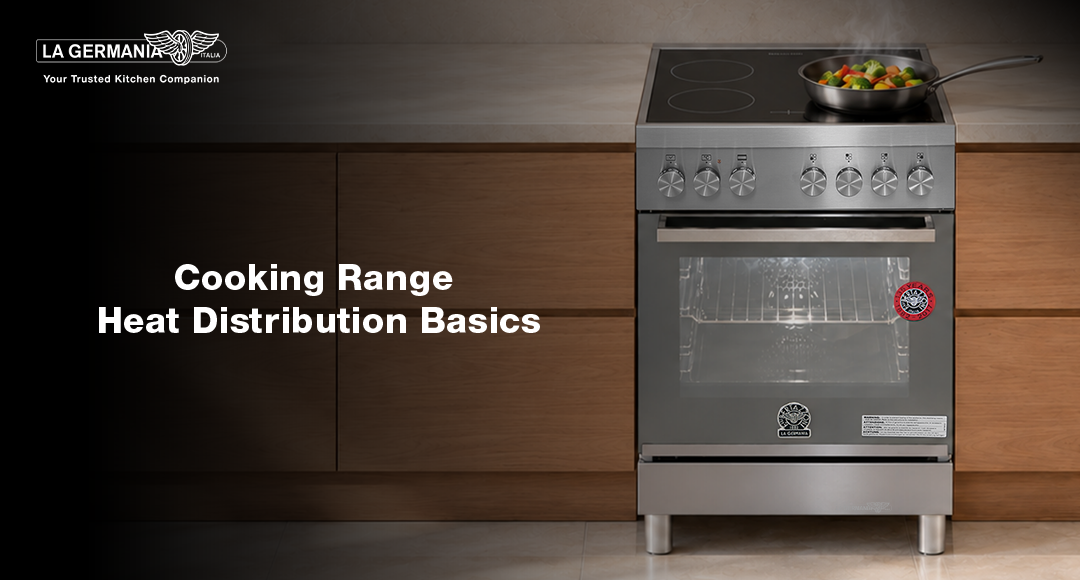
Cooking range heat distribution is the most important factor to consider when you want to achieve perfect culinary results in your Filipino kitchen. Whether you are baking soft pandesal or roasting a golden chicken, how heat moves inside your appliance dictates the quality of your meal.
Many home cooks struggle with “hot spots” where one side of a cake burns while the other remains raw. Understanding the science behind your cooking range allows you to master your recipes and avoid wasting ingredients.
In this guide, we will explore the different ways heat travels through burners and ovens. We will also look at how modern technology helps you cook more evenly at home.
The Basics of Heat Movement in the Kitchen
To understand why some ovens cook better than others, you must first understand the three types of heat transfer. These are conduction, convection, and radiation. Each plays a specific role in how your food transforms from raw to ready.
Conduction happens when heat moves through direct contact. When your pan sits on a burner, the heat moves from the element into the metal of the pot. This is why high-quality cookware is essential. Metals like copper or aluminum spread heat faster than others.
Convection involves the movement of air or liquid. In an oven, hot air rises and cool air sinks. This creates a natural cycle. However, a fan can speed up this process. This leads to much more consistent temperatures throughout the entire oven cavity.
Radiation is the heat you feel from a distance. Think of the glowing red coils in an electric cooking range. This heat travels in waves. It is perfect for browning the top of a lasagna or a tray of cheesy baked macaroni.
Burner Technology and Stovetop Efficiency
The top of your cooking range is where most of your daily cooking happens. The way heat spreads across your pans depends heavily on the type of burner you use. In the Philippines, we often use wide pans like the kawali. This requires a broad and steady heat source.
Traditional gas burners produce a flame that touches the bottom of the pan. While gas provides instant control, the heat is often concentrated in a ring. This can result in uneven heat distribution across the surface of the pan. To fix this, high-end models use “Triple Ring” burners to provide a more uniform flame spread.
If you prefer a cleaner look, an electric cooking range uses solid hot plates or radiant coils. For example, the all-electric cooking range from La Germania uses four electric hotplates. These plates retain heat for a long time and provide a flat surface for maximum conduction. This ensures that the entire base of your pan receives heat at the same time.
The Power of Induction Cooking
The most advanced form of stovetop heat management is found in an induction cooking range. Unlike gas or electric, induction does not use a heating element to warm a pan. Instead, it uses magnetic fields to turn the pan itself into the heat source.
This technology offers the best heat distribution currently available. There are no hot spots because the entire bottom of the magnetic pan heats up instantly and evenly. An induction cooking range with an electric oven is incredibly efficient. It wastes very little energy. It also keeps your kitchen much cooler during long cooking sessions. This is a huge benefit in the humid Philippine climate.
Why Oven Insulation and Design Matter
If you have ever noticed that your cookies are darker on the bottom than on the top, your oven may have poor heat distribution. The design of the oven cavity determines how well air can circulate.
Modern ovens use high-grade insulation to trap heat inside. This prevents the outside of the appliance from getting too hot. It also ensures that the temperature stays steady. If an oven loses heat through the door or sides, the thermostat will constantly turn on and off. This creates “temperature swings” that can ruin delicate baked goods like chiffon cakes.
The placement of the heating elements also matters. Many ovens have a bottom element for baking and a top element for grilling. Higher-quality models often include a hidden element behind a fan. This is known as true convection. It pushes hot air into every corner of the oven. This allows you to bake multiple trays of food at the same time without needing to rotate them.
The Role of Thermostats in Consistent Cooking
A reliable thermostat is the brain of your cooking range. It monitors the internal temperature and adjusts the heat source to stay at your desired level. In cheaper models, thermostats can be inaccurate by as much as 10 to 20 degrees.
For Filipino bakers, precision is everything. If you set your oven to 180°C, you expect it to stay there. A high-quality gas thermostat oven, like the one found in the La Germania mixed gas and electric model, provides excellent control. This model is ideal for households that want the speed of gas burners, with the added flexibility of an electric hotplate, while still having a steady oven for baking and roasting.
This model is perfect for households that want the speed of gas burners but need a steady oven for roasting.
Pan Materials and Their Impact on Results
You can have the best oven in the world, but your choice of bakeware still matters. Different materials react to heat in different ways.
- Aluminum: This is a great conductor. It heats up and cools down very quickly. It is perfect for cookies and biscuits.
- Glass and Ceramic: These materials are poor conductors. They take a long time to heat up but hold heat for a very long time. Use these for casseroles or slow-cooked meat dishes.
- Dark-Colored or Non-Stick Pans: These absorb more radiant heat. They will brown your food much faster than shiny silver pans. You may need to lower your oven temperature slightly when using them.
Dual-Fuel Ranges for Ultimate Versatility
Many Filipino families choose a “Dual Fuel” or mixed cooking range. These units combine the benefits of gas and electricity. You might have gas burners for quick frying and an electric oven for precise baking.
This setup helps with cooking range heat distribution because electric ovens often provide more stable temperatures than gas ovens. However, many people still prefer gas ovens for roasting meat because they produce a “moist” heat. This keeps your Lechon Manok juicy on the inside while the skin gets crispy.
How La Germania Ensures Even Heating
For decades, La Germania has been a household name in the Philippines. They design their appliances to handle the heavy-duty cooking habits of Filipino families.
The brand focuses on using thick, high-quality materials for their oven cavities. This provides natural heat retention. Their best-selling models often feature fan-assisted ovens. These fans eliminate the air pockets that cause uneven browning. By choosing a reputable brand, you gain access to Italian engineering that is adapted for local conditions.
La Germania also uses heavy-duty pan supports and burners. These ensure that your pots stay level. If a pan is tilted, the oil and ingredients will gather on one side. This leads to uneven frying. Their precision-engineered components prevent this issue from happening.
Simple Tips for Better Heat Distribution at Home
You do not always need a new appliance to improve your cooking results. Here are some simple steps you can take today for better cooking range heat distribution:
- Preheat Thoroughly: Most ovens need at least 15 to 20 minutes to reach a stable temperature. Do not put your food in too early.
- Use a Pizza Stone: Placing a heavy stone or a tray of bricks at the bottom of an electric oven can help stabilize the temperature.
- Avoid Overcrowding: If you put too many pans in the oven, you block the airflow. Leave at least two inches of space between your pans and the oven walls.
- Check Your Door Seal: If the rubber gasket around your oven door is cracked, heat will escape. This causes the front of your oven to be cooler than the back.
Choosing the Best Model for Your Needs
When you are ready to upgrade, look at the full range of La Germania products. Consider how much baking you do versus how much stovetop cooking you do.
If you are a serious baker, look for an electric oven with a convection fan. If you do a lot of stir-frying and heavy searing, a high-output gas range is the traditional choice. For those who want the most modern and safe experience, an induction cooking range is the way of the future.
If you have specific questions about installation or features, you can always contact La Germania for expert assistance. Their team can help you choose a model that fits your kitchen size and your power or gas requirements.
Frequently Asked Questions (FAQs)
What causes “hot spots” in an oven?
Hot spots are caused by uneven airflow or the proximity of the food to the heating elements. In many ovens, the corners or the areas closest to the walls are hotter than the center. Using a fan-assisted oven helps solve this problem for better heat distribution in the oven.
Is an electric cooking range better than gas for baking?
Both electric and gas cooking ranges can deliver great baking results, depending on your needs and preferences. Electric ovens are often preferred for their consistent and even heat, while gas ovens offer responsive temperature control and a different cooking environment. The right choice ultimately depends on the type of baking you do and the features that matter most to you.
Does an induction cooking range require special pans?
Yes, induction requires pans made of magnetic materials like cast iron or magnetic stainless steel. You can check your existing pans by seeing if a magnet sticks to the bottom.
How do I know if my oven temperature is accurate?
Some ovens have built-in thermometers or temperature displays that help you monitor the oven’s internal temperature. If your oven does not have this feature, you can use an external oven thermometer. Simply place it inside the oven and compare the actual temperature reading with the temperature you set on the dial or control panel.
Why does my oven take so long to preheat?
The larger the oven, the longer it takes to heat the air inside. Also, if your oven has thick stone or heavy metal components, those parts must absorb heat before the temperature stabilizes.
Conclusion
Mastering cooking range heat distribution is the secret to becoming a better home cook. By understanding how conduction, convection, and radiation work, you can make smarter choices in the kitchen. Whether you are choosing a new induction cooking range or learning to manage your current gas stove, consistency is the goal.
High-quality appliances from La Germania provide the foundation you need for success. Their commitment to durability and precision ensures that your family meals are cooked perfectly every time. Take the time to understand your appliance, use the right tools, and enjoy the delicious results of even, reliable heat.